
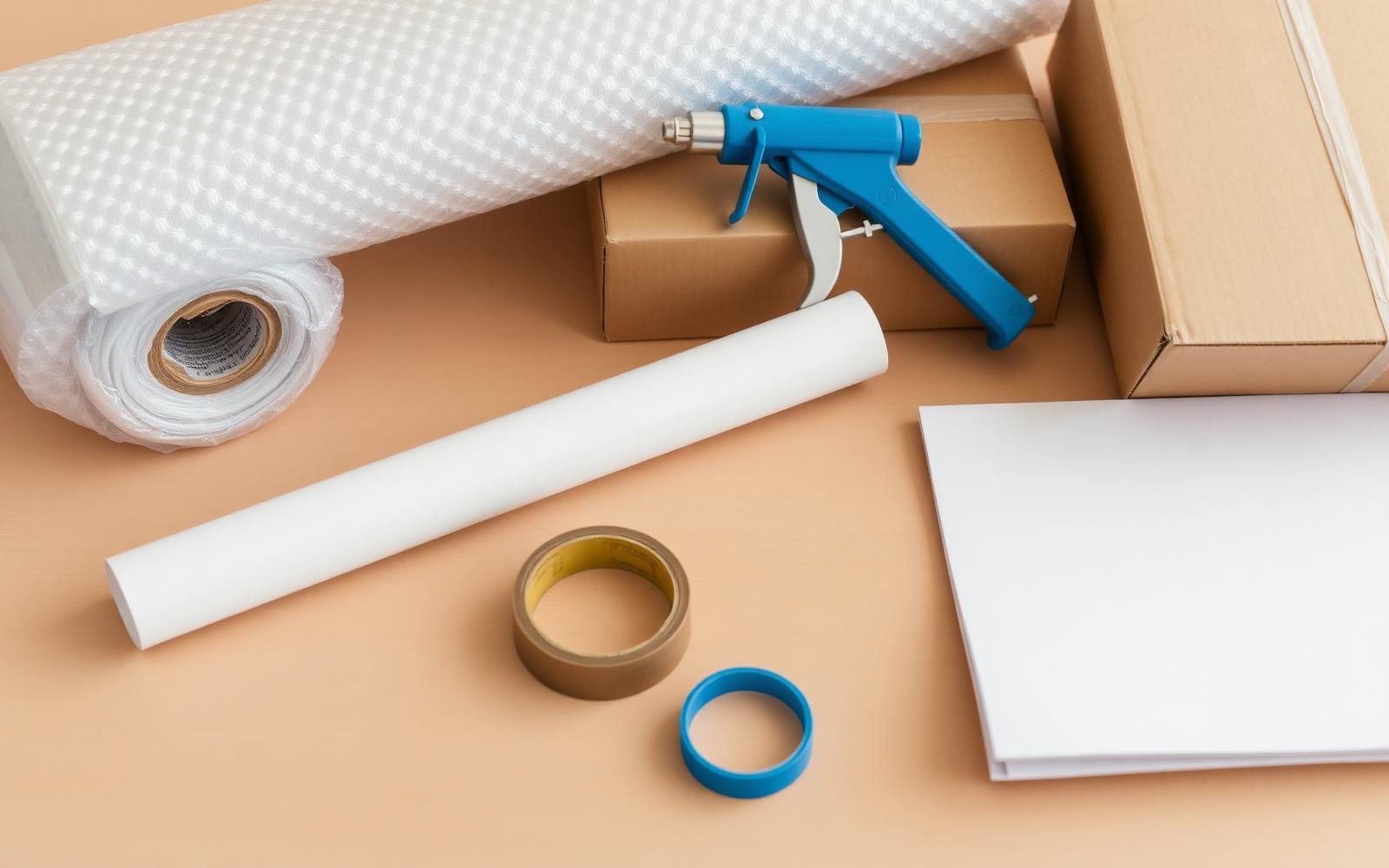
Almost all damage during a move happens for one of two reasons. Something moved inside its box, or something was carried in the wrong thing altogether. Both come down to materials. Spend a little here and you rarely need to talk about claims later.
Boxes are not all the same
A supermarket box has already carried fruit across a country. It has been damp, it has been stacked, and its corners are soft. It will hold clothes. It will not hold plates. Proper double wall boxes cost a few dirhams each and hold their shape when stacked six high in a truck.
Use small boxes for heavy things and big boxes for light things. People do the opposite and then wonder why the bottom falls out of the box of books. A box of books should be small enough that one person can lift it without holding their breath.
- Small double wall boxes for books, tools, tinned food
- Medium boxes for kitchen items, toys, small appliances
- Large boxes for bedding, cushions, winter clothes
- Wardrobe boxes with a rail so suits and dresses hang
- Flat picture boxes for frames, mirrors and TVs
Wrap first, then fill the gaps
Bubble wrap goes around the item. Paper or foam fills the space that is left. If you can shake the box and hear movement, it is not packed yet. Glasses go upright, not on their side. Plates go on their edge, like records, because a plate is far stronger that way than lying flat.
Newspaper is cheap but the ink transfers onto white china and glass. Plain packing paper costs a little more and keeps everything clean. For anything with a screen, use foam sheets or the original box if you kept it.
Blankets and film for furniture
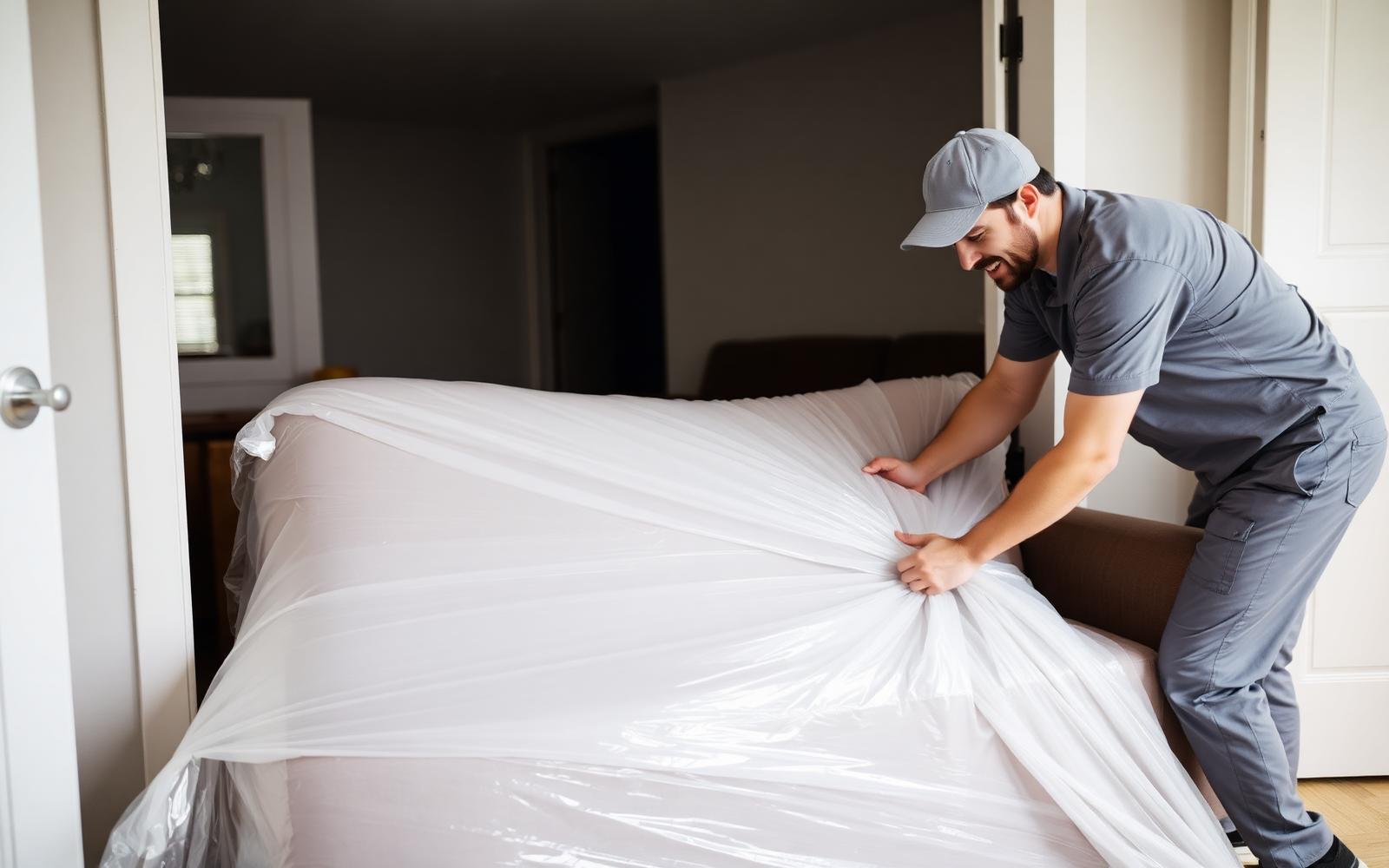
Furniture rarely breaks. It gets scratched, scuffed and dented at the corners. Moving blankets take that hit. Stretch film goes over the blanket to hold it in place, never straight onto polished wood or leather in the heat, because it can mark the surface.
Sofas travel best standing on end with the cushions off and wrapped separately. Mattresses need a proper mattress bag, not a bed sheet. Dining tables should have their legs off, wrapped in one bundle and taped to the underside of the table top so nothing goes missing.
Tape, markers and the small things
Use real packing tape with a dispenser. Masking tape gives up in the heat inside a truck. Tape the bottom of every box in an H shape, along the seam and across both edges. It takes three seconds and it is the difference between a box that holds and a box that opens in someone’s arms.
Keep a marker in your pocket and a small bag of zip ties. Screws, brackets and remote controls go into labelled bags taped to the item they belong to. Nothing wastes more time on the second day than a bed frame with no bolts.
What to never put in a box
Paint, gas cylinders, aerosols, cleaning chemicals and anything that leaks should not travel in a packed truck in this climate. Passports, jewellery, laptops, medicine and house keys should stay with you. It is not about trust; it is about not opening thirty boxes at midnight looking for one small thing.
Good materials are the cheapest insurance you can buy. A move is a few hundred boxes moving at once, and every one of them is trusted to a bit of card, some tape and the person carrying it.
A simple room by room guide
The kitchen needs the most materials and the most time. Plan on paper for every plate and glass, small boxes only, and a separate box for the things you use daily so you are not hunting for a kettle at midnight. Knives get wrapped and taped, blades covered, and marked clearly on the outside.
Bedrooms are quick if you use wardrobe boxes. Clothes stay on their hangers, go straight in, and come straight out at the other end. Shoes go in their own boxes, not squeezed around fragile items. Mirrors and framed pictures always travel on their edge, never flat, with tape across the glass so a crack cannot spread.
Living rooms are mostly furniture and electronics. Photograph the back of the TV and the router before pulling out cables, and put the cables into a labelled bag straight away. Lamps come apart: shade, bulb and base all packed separately.
Bathrooms look easy and then leak everywhere. Screw the caps tight, tape over them, and put every bottle inside a sealed plastic bag before it goes in a box. Anything half empty is better thrown away than carried across town.
Questions People Ask
Can I reuse old boxes?
For clothes and soft items, yes. For anything breakable or heavy, use new double wall boxes; old card has already lost its strength.
How many boxes will I need?
A one bedroom flat usually needs 25 to 35 boxes, a two bedroom around 50, and a villa well past a hundred. A survey gives a closer number.
Do you supply the materials?
Yes. Boxes, paper, bubble wrap, blankets, film and mattress bags all come with the crew when you book packing.